Aqsa Arif: Raindrops of Rani at Edinburgh Printmakers
Walking up the stairs of Edinburgh Printmakers, the first thing that grabs you is the colour. A riot of it; bright and bold and not only within the works themselves but across the gallery walls. At first glance the exhibition almost feels playful. The colours are joyful, the film contains moments of humour, and the space feels visually cheerful. But spend a little time with the work and that first impression begins to unravel.
Arif’s installation brings together film, textiles, photography and sculpture to explore displacement, memory and the realities of seeking refuge in a new country. Much of the work draws from the artist’s own family history. After arriving in the UK from Pakistan as asylum seekers, her family were placed in a high-rise flat in Glasgow’s Southside. Years later the residents were moved out so the building could be used as the backdrop for a television advert by Sony promoting the Sony Bravia televisions. The now iconic 2006 commercial directed by Jonathan Glazer, cost £2 million and had explosions of paint cascading down a tower block in spectacular bursts of colour. Yet behind that spectacle was the quieter reality that many of the residents — largely working-class people, refugees and asylum seekers — had been displaced to make it happen.
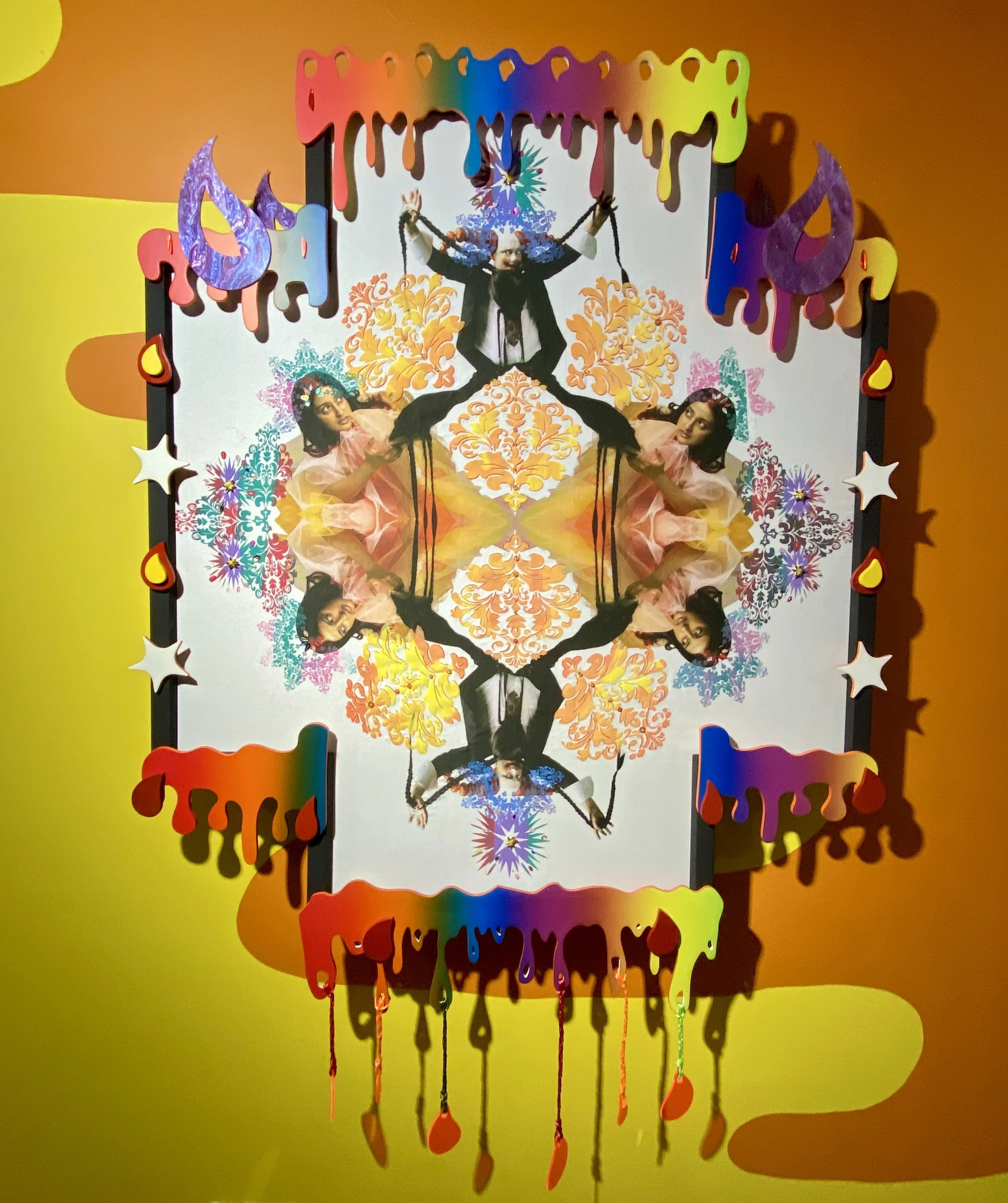
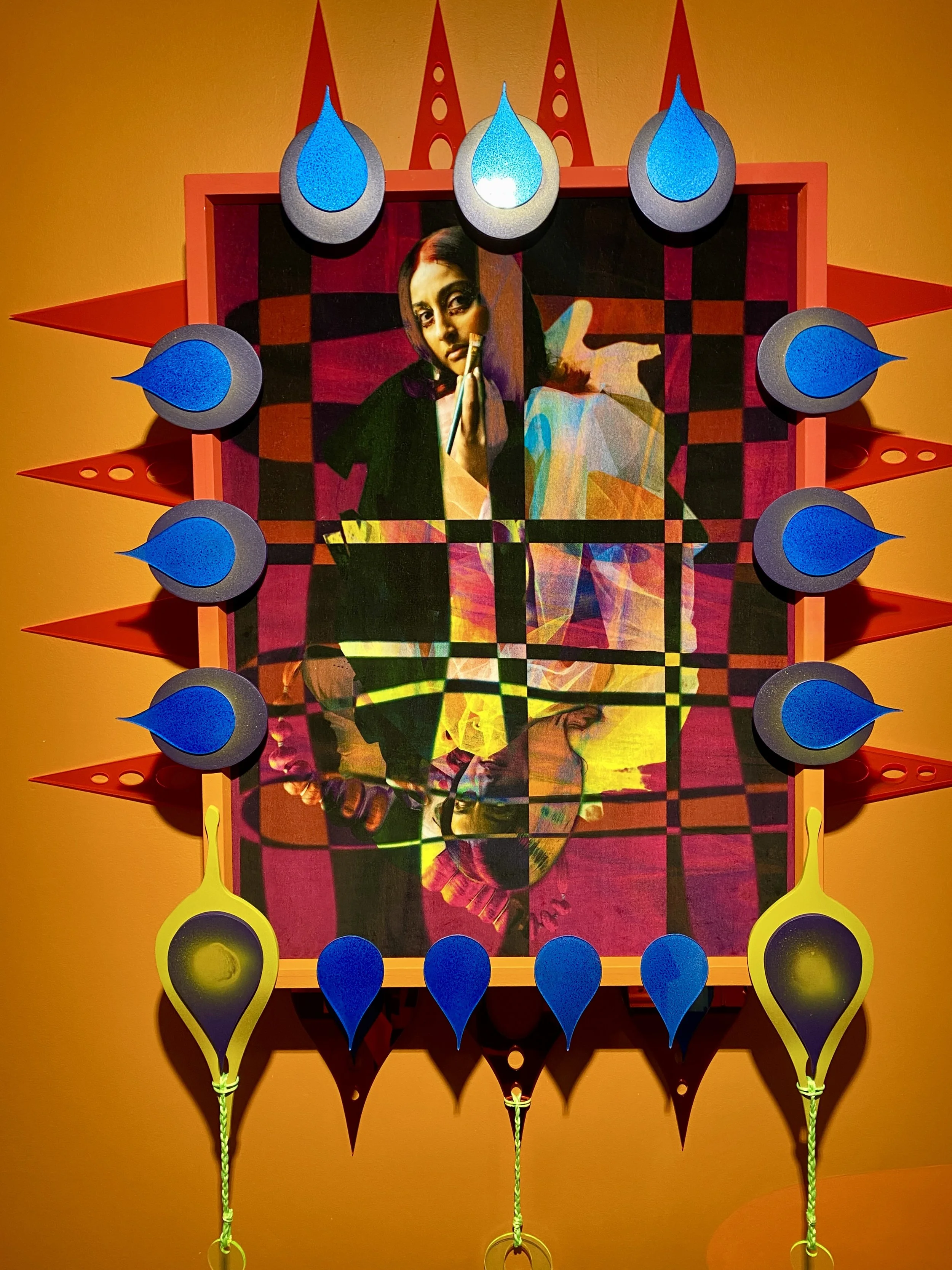
Knowing this story shifts how the exhibition’s vivid palette is read. Those bright colours begin to feel more complicated. Being removed from your home so that a multinational company can film an advert isn’t fun. Seeking asylum isn’t fun. Nor is navigating life in a new country while dealing with the emotional weight of displacement and intergenerational trauma.
At the centre of the exhibition is a film that reimagines this history through a fictional narrative. Drawing inspiration from the Punjabi love story Heer Ranjha, Arif introduces the character of Heera, a mother living in a Scottish council flat with her daughter Sohni after their home has been destroyed by flooding. Through this story the artist explores the different ways generations respond to migration and assimilation. Heera retreats into memory and tradition, becoming increasingly isolated within the home, while Sohni is forced to adapt quickly to survive school, language and social pressures. The humour that occasionally surfaces in the film begins to feel uneasy, is this less about entertainment and more about coping.
These tensions extend beyond the film into the textile works displayed throughout the gallery. For me, these pieces were the standouts. Large braided forms echo the ever-growing braid worn by Heera in the film. In many South Asian households, braiding and oiling hair is an intimate ritual of care passed between mothers, daughters and grandmothers. Here that everyday act becomes something larger, a symbol of memory, protection and cultural identity. Arif worked with her mother, Tahira Arif, to create these braided textiles, adding another layer of generational exchange to the work itself.
What initially appears colourful and playful gradually reveals something much heavier. The exhibition moves between beauty and discomfort, humour and unease, spectacle and the overlooked realities behind it. By the time you leave the gallery, those bold colours feel less like decoration and more like a reminder that stories of displacement and belonging are often hidden behind surfaces that appear bright and celebratory.
Aqsa Arif: Raindrops of Rani is on display at Edinburgh Printmakers until 2nd November 2025.